Call us anytime

+91 96882 44777
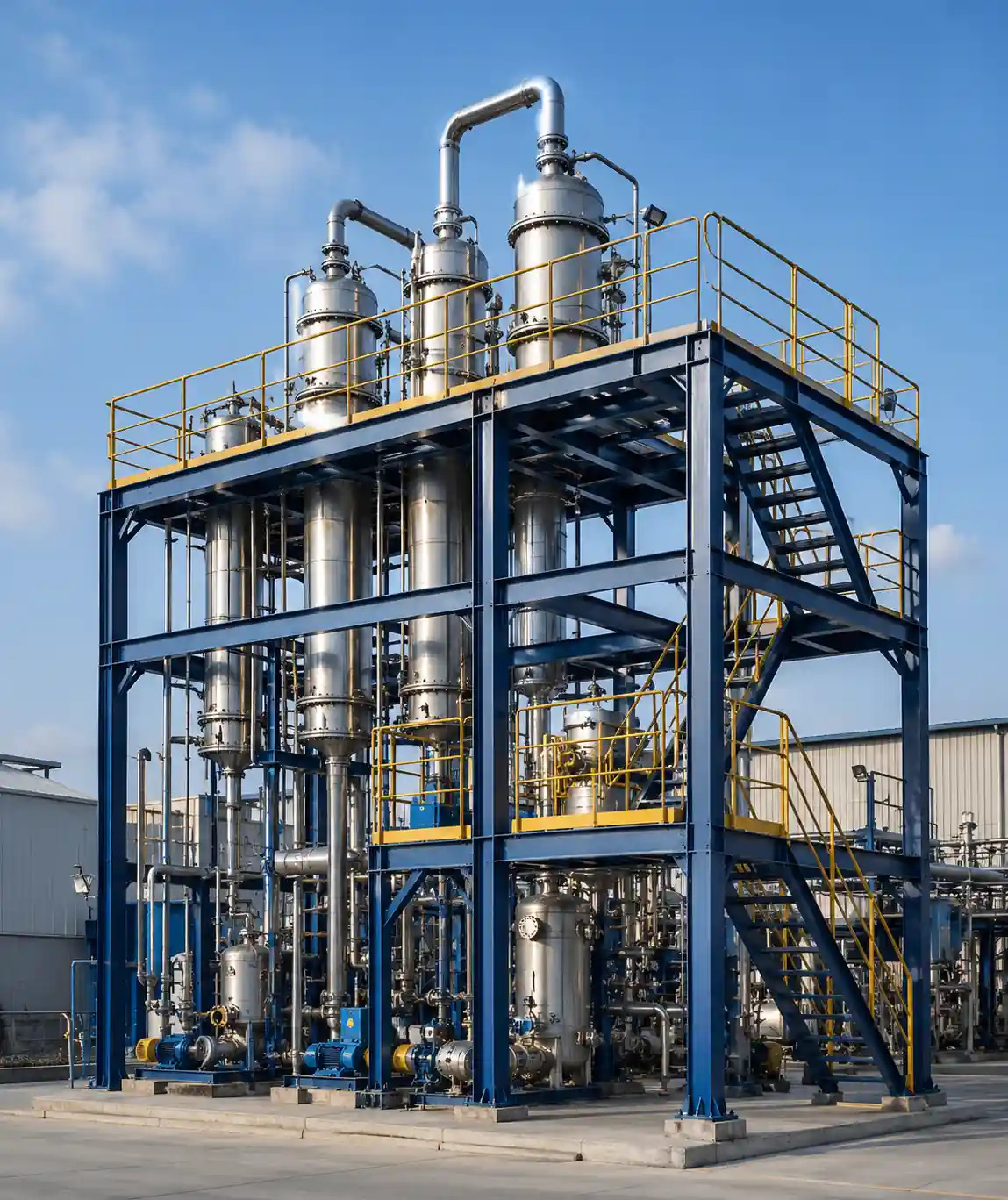
An Evaporator is a critical device used in wastewater treatment to concentrate liquid solutions by evaporating the water content. It works by applying heat to separate water from waste streams, leaving behind a more concentrated solution or slurry. This helps industries reduce the volume of wastewater, recover valuable materials, and lower disposal costs.
Evaporators are widely used in sectors like pharmaceuticals, chemicals, food processing, and textiles. Multi-Effect Evaporator (MEE) A Multi-Effect Evaporator (MEE) is a highly efficient type of evaporator designed to reduce energy consumption by utilizing the vapor generated from one effect (or stage) as the heating medium for the next. In a typical MEE system, the process involves multiple stages where the pressure decreases progressively. This allows the system to achieve high levels of water removal with less energy compared to single-stage evaporators. MEEs are particularly effective in Zero Liquid Discharge (ZLD) systems and are favoured in industries aiming to minimize energy usage and environmental impact.
Benefits of Evaporator(MEE)
Extreme Energy Efficiency: By using the evaporated vapor from one vessel (effect) to heat the next, the latent heat of vaporization is recycled, drastically lowering overall steam requirements.
Lower Operating Costs: Reduced energy consumption translates directly into lower utility bills, making MEEs highly cost-effective over their operational lifespan.
High Concentration Ratios: Capable of concentrating dilute liquids into highly dense solutions or recovering valuable byproducts, saving on downstream storage and transportation costs.
Zero Liquid Discharge (ZLD) Compliance: Essential for treating large volumes of industrial effluent (such as in chemical or textile manufacturing), helping facilities comply with environmental regulations and reduce their carbon footprint.
Scalability & Flexibility: Systems can be tailored with additional effects (typically 2 to 5 stages) depending on the specific capacity and steam economy required